Beyond the Usual Names: The Bag Brands Worth Checking Out
Six emerging and independent bag brands offering distinctive design, thoughtful craftsmanship and a fresh alternative to the traditional luxury brands.
6 minute read
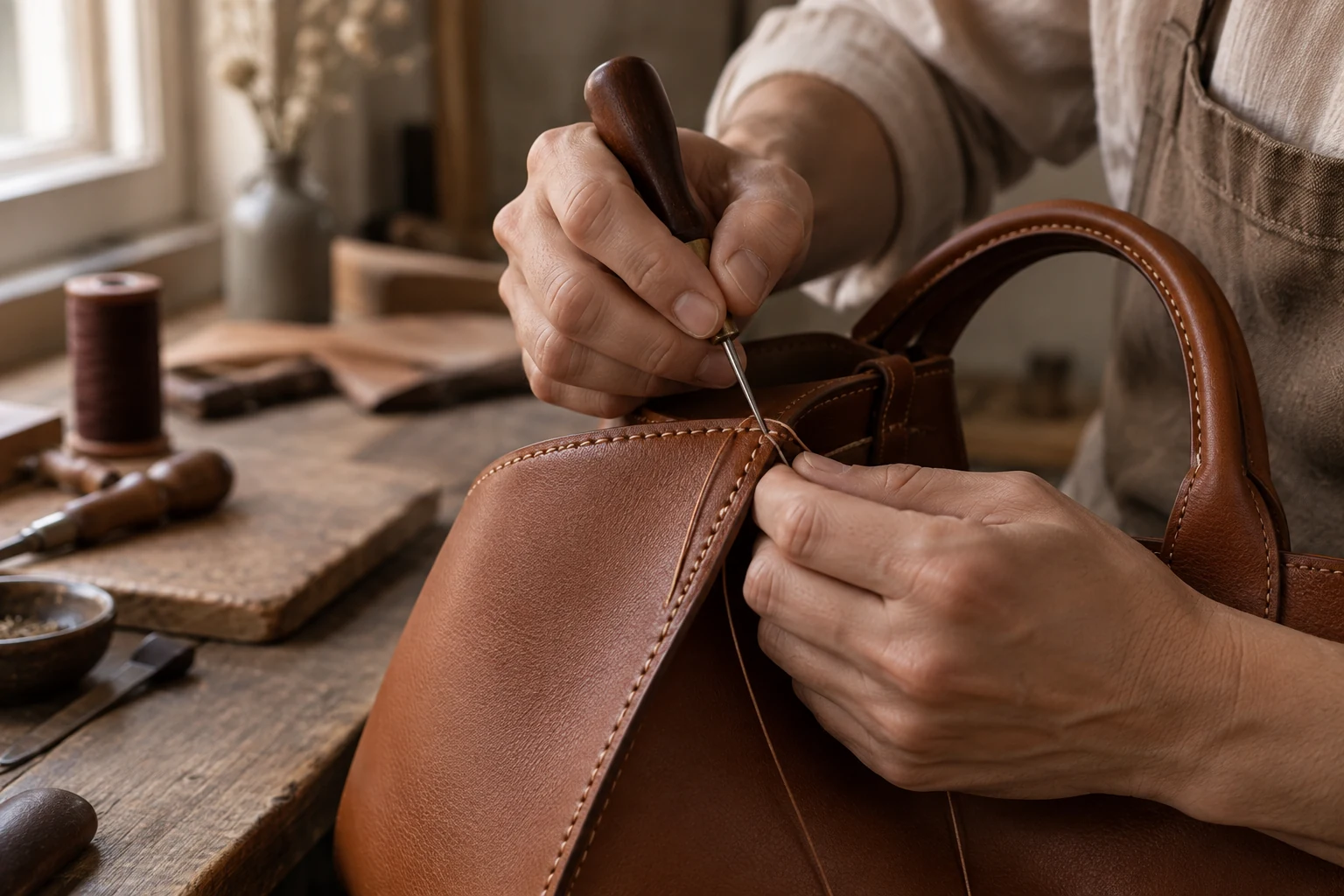
There will always be a place for the great handbag brands. Their archives, craftsmanship and instantly recognisable silhouettes have shaped the way we think about bags. But some of the most interesting designs are now coming from smaller and younger labels, many of which offer a quieter alternative to the familiar luxury names.
These names may not yet have the same resale history or global recognition as established luxury brands. That is part of their appeal, but it also means they should be approached differently. Buy the design you genuinely love, rather than assuming it will become an investment.
Here are six names worth watching.
Savette
If your taste leans towards beautifully controlled shapes and minimal branding, Savette is a natural place to begin.
Founded by Amy Zurek in 2020, the New York label creates restrained, architectural bags by hand outside Florence. Its signature hardware gives the designs an identity without relying on an obvious logo. The result is polished, grown-up and quietly distinctive.
The collection is deliberately edited rather than expansive. That restraint helps each silhouette feel considered, rather than like another seasonal variation created simply to fill a range.
Savette is particularly appealing for someone drawn to the refinement of classic top-handle and shoulder bags, but looking for something less immediately recognisable. The Symmetry family is a useful starting point.
Why it is worth watching: Savette already has a clear visual language, strong craftsmanship credentials and the beginnings of genuine brand recognition. The company describes its bags as modern heirlooms, made using Italian leather and traditional leatherworking techniques.
Source: savette.com/about-the-brand
Métier
Métier makes bags for people who care as much about how a bag works as how it looks.
Founded in London in 2017 by Melissa Morris, the label focuses on discreet luxury leather goods with carefully organised interiors and a strong emphasis on travel and everyday function. The designs are elegant but purposeful, often incorporating thoughtful pockets, compartments and carrying options.
This is not a brand built around a conspicuous signature clasp or a highly recognisable monogram. Its appeal is more private. The pleasure is in the leather, construction and small functional details that become apparent through use.
Métier is especially worth considering for work, travel and daily bags. It suits someone who wants excellent organisation but does not want their bag to look overly corporate or practical.
Why it is worth watching: Métier occupies an interesting space between traditional luxury craftsmanship and genuinely useful modern design. It has the potential to develop a loyal following among customers who value discretion and function.
Source: metier.com/pages/discover-our-story
Liffner
Stockholm-based Liffner brings a little more personality to minimalist bag design.
Founded by Paulina Liffner von Sydow in 2012, the brand describes its approach as expressive minimalism. That is a useful distinction. Its bags are generally refined and wearable, but often include an unusual proportion, sculptural handle or piece of jewellery-like hardware that stops them from feeling anonymous.
The collection can move easily between polished everyday totes, softer shoulder bags and smaller statement pieces. It feels Scandinavian in its restraint, but not austere.
Liffner says its handbags are produced in small batches at a family-run atelier outside Florence. The focus on versatile silhouettes and relatively restrained branding makes it a particularly good option for someone who wants luxury materials without stepping into the pricing or familiarity of the largest brands.
Why it is worth watching: Liffner offers a recognisable point of view at a more approachable level of the premium bag market. Its balance of practicality, character and Italian production makes it a strong candidate for wider recognition.
Source: liffner.co/pages/brand
Wandler
Wandler is a good reminder that minimal does not have to mean predictable.
Elza Wandler launched the Amsterdam-based brand in 2017. Its bags combine clean construction with confident curves, unexpected dimensions and a thoughtful use of colour. The long-running Hortensia is probably its best-known silhouette, while newer families continue the brand's sculptural approach.
Wandler is particularly good at creating bags that feel distinctive in silhouette rather than through logos. Even the more restrained colours retain a certain graphic quality.
The brand says its bags are designed in Amsterdam and handmade in Veneto from Italian calf leather. That production story, combined with a stable group of recognisable families, gives Wandler more substance than a label built around a single viral style.
Why it is worth watching: Wandler already has a strong design code and several established silhouettes, but remains outside the most obvious luxury rotation. It is an appealing middle ground between an emerging label and a fully established brand.
Source: wandler.com/collections
DeMellier
DeMellier is one of the more accessible entries on this list and may have the broadest everyday appeal.
The London label offers structured totes, shoulder bags, crossbodies and top-handle designs with clean lines and polished hardware. Many styles are designed around practical daily use, making the brand especially relevant for work bags and versatile wardrobe staples.
DeMellier says its bags are made in Europe using responsibly sourced materials. Its collection includes recognisable families such as the New York, Vancouver, Hudson and Brooklyn.
The designs often echo the composure of traditional luxury bags without becoming direct copies. That distinction matters. A compelling contemporary brand needs its own identity, even when it works within familiar categories.
Why it is worth watching: DeMellier offers a relatively approachable route into polished leather bags. Its strongest opportunity is not necessarily resale performance, but providing elegant and practical design at a level below traditional luxury pricing.
Source: demellierlondon.com/pages/our-story
Verafied
Verafied represents a newer generation of brands building attention around highly photogenic, attainable designs.
Based in New York, the label focuses on sculptural but wearable silhouettes with understated branding. Styles such as the Éclair, Club and Café Mini demonstrate its ability to turn a simple shape into something memorable through proportion and texture.
The collection is more trend-responsive than some of the quieter luxury labels on this list. That can be a strength if you are looking for a bag that makes an outfit feel current, but it also makes careful selection important. Look for the silhouettes that still make sense once the immediate styling moment has passed.
The brand positions itself around slow fashion and considered craftsmanship, with a catalogue spanning shoulder bags, hobos and compact structured designs.
Why it is worth watching: Verafied has created a distinctive visual identity at an accessible contemporary price level. The next test will be whether its key families develop longevity beyond their initial online momentum.
Source: verafiedny.com/collections/bags
What should you look for in an emerging bag brand?
A beautiful first impression is not enough. Before buying from a younger label, consider:
- Does the brand have a recognisable design language of its own?
- Is the bag well constructed, particularly at the handles, corners and closures?
- Are the materials and place of manufacture clearly disclosed?
- Is the shape practical for the way you intend to use it?
- Does the brand support repairs or replacement parts?
- Would you still want the bag if the name never became widely recognised?
- Can you return it easily if the proportions or weight do not work in person?
Resale data may be limited, inconsistent or nonexistent. That does not make the bag a poor purchase, but it means the decision should be based primarily on design, quality and individual use.
The MEA view
The next important bag brand may not be the one generating the most noise. More often, it is the one developing a consistent point of view, improving its craft and giving customers a reason to return after the first successful style.
Savette and Métier are the strongest options here for discreet modern luxury. Wandler and Liffner offer more visible personality, while DeMellier and Verafied provide approachable ways to explore beyond the traditional brands.
None needs to become the next version of an established brand to be worthwhile. The most interesting emerging brands are the ones beginning to look unmistakably like themselves.
Brand information and availability may change. MEA recommends confirming product details, materials, pricing and returns directly with the brand or retailer before purchasing.
The MEA Edit
- Start here
- Savette and Métier for discreet modern luxury
- More personality
- Wandler and Liffner for distinctive shape without obvious logos
- More approachable
- DeMellier and Verafied for exploring beyond traditional brands
- Before you buy
- Prioritise design, construction and use where resale history is limited
- Worth watching
- Brands developing a consistent point of view rather than one viral style
Emerging Brands / Independent Labels / Craftsmanship / Savette / Metier / Liffner / Wandler / DeMellier / Verafied / New Brands / Trends